Showing posts with label LEARNING. Show all posts

food rules: ingredient lists

~ ~
Yesterday, when this week of posts started, I talked about reading labels of processed foods you want to bring home. (Not sure what qualifies as "processed food"? It's hard to tell sometimes, & they're not ALL out to get us. Click here to read more about how we define them.)

One of the most important things to look at when picking up anything outside of the produce section is the ingredient lists. We know the four big bad guys, but often the names of these ingredients are changed. You add up the other kinds of fat, & a gram isn't accounted for... This tells you something. It says "vegetable oil" when really it means "palm oil". You only learn what's in the vegetable oil by calling the manufacturer. 

In his book "In Defense of Food", Michael Pollan suggests not buying anything with more than five ingredients. I realize that if your buying frozen pizza or minestrone, you could have five vegetables in there. The rule may not work for ALL processed foods. The rule is helpful when you're looking at things like, say, the standard loaf of bread. Bread is a simple thing to make:
bread, pinch of salt, yeast, water–maybe grains or seeds or cinnamon to change it up
The standard list for a loaf of bread at a grocery looks something like this (Wonder Bread, in this case):
Whole wheat flour, water, wheat gluten, high fructose corn syrup, contains 2% of less of: soybean oil, salt, molasses, yeast, mono and diglycerides, exthoxylated mono and diglycerides, dough conditioners (sodium stearoyl lactylate, calcium iodate, calcium dioxide), datem, calcium sulfate, vinegar, yeast nutrient (ammonium sulfate), extracts of malted barley and corn, dicalcium phosphate, diammonium phosphate, calcium propionate (to retain freshness).
But okay, we know we need preservatives. We know white bread is the devil. So let's look at a healthier example, like Nature's Own. No High Fructose Corn Syrup (HFCS)–which deserves its own post & still has yet to be fully tested for negative effects on human health– & no "artificial" things... but lots of other extras:
STONE GROUND WHOLE WHEAT FLOUR, WATER, BROWN SUGAR, YEAST, WHEAT GLUTEN, CONTAINS 2% OR LESS OF EACH OF THE FOLLOWING: SALT, VEGETABLE OIL (SOYBEAN OIL OR CANOLA OIL), DOUGH, CONDITIONERS (SODIUM STEAROYL LACTYLATE, CALCIUM, STEAROYL-2-LACTYLATE, MONOGLYCERIDES, CALCIUM IODATE, ETHOXYLATED MONO AND DIGLYCERIDES, CALCIUM PEROXIDE, DATEM), CULTURED WHEAT FLOUR, VINEGAR, CALCIUM SULFATE, MONOCALCIUM, PHOSPHATE, YEAST FOOD (AMMONIUM SULFATE), SOY LECITHIN
I don't know about you, but I don't want to eat ammonium sulfate. And I don't have to. "Yeast food"? Yeast don't exactly have discriminatory tastes. They eat sugars. Give them sugar or malts. We adding to our foods to make them stretch, to produce them for less. Over the last fifty years, our priorities have shifted. We've gone from spending almost a quarter of our budget on food to spending less than 10 percent*.

This is not because it takes less money to feed a family, or because it's gotten more affordable. In fact, prices around the world have jumped higher this year*. Millions more are expected to depend on international aid. But we miss the increase, because we're not buying any real corn or wheat or soy beans. We're buying them broken down & mixed with conditioner, chemicals & preservatives. Our foodstuff prices are staying the same.

This means we're getting less of less, instead of more for less. We're giving up real food for the sake of convenience. So this year, take some time & read the labels. Put the food–the grains, real vegetables & nutrients–back into the grocery cart. Look for ingredient lists that are...
1. comprehensible: Can you pronounce the words? If not, does it explain to you what they are?
2. without HFCS: Independent studies (studies NOT funded by the farming industry) show us that it does not satisfy the sugar craving & results in overeating. Our bodies don't know what to do with it. 
3. without colors: Nix, for example, red 40–a natural substance, but not one you want to eat. It's 99 percent coal tar derivatives (and not ticks, like we thought)*

So start there. Start getting the fake things out of your diet. You may be unable to buy things like Pop Tarts or fitness bars, but that means you'll be replacing them with heartier, more energy-packs whole grains–or at least less sugars. Baby step into it. THEN start counting your ingredients. Sift through the canned green beans until you find the one that really is just salt, canned beans & water. It's possible, & the price difference isn't remarkable.

We can do it. We can cut out the chemicals & demand better food. Remeber: it's for us, our own health, the health of future generations &, thank goodness, the farmers. This is how democracy & "free markets" work: they're produce more vegetables & varied crops if we tell them we want it. 

Do you have suggestions for watching what we bring home? How are you avoiding processed foods? Have you finally stopped putting plastic-covered plastic dishes in the microwave? I'd love to hear about your experiences, too! Comment below.

Enjoy what you're reading? I'd love to know that we're on track. Click Follow on the right side of the screen to stick with us.

food rules

~ ~

Don't get me wrong. I hate rules of all kinds. I think we've made food too full of rules already. This much grain, that much fat, heart-healthy, protective against x cancer... most foods fall into both categories–coffee is good for you AND bad for you. The tannins in red wine can cause AND protect against cancer? Let's face it. We're not sure what we know about food.

But when a good friend asked how she could start eating locally, I had time to stop & think about how much Joe & I have learned, are still learning. I'm by no means an authority, but I certainly hope to be in my future. Here's how I would summarize what I know. The focus of these rules is to increase healthy eating & decrease the CO2 stamp of our food: process food less, make food travel less.

Watching a French documentary yesterday from Capital Terre, we watched crawfish be caught off of France's coast, then shipped to Southeast Asia to be processed, then shipped back to France to be sold in a discount grocery. Our "modern" food industry is filled with mind-boggling nonsense like this.

One of the things that's most important to me, more than my health, more than seeing happy trees (not more than saving the planet for a future generation)–more than almost anything else–is taking America back to a time when it was the bread basket of the world. We could feed ourselves much better, independent of even industrial grocery stores, if we focused on sustainable agriculture instead of having the biggest crop yield, which then limits us to soy and corn. These rules are a nice help, but when it comes to food rules, nothing is better than shopping at local farmer's markets and shops.

Let's look at how we can add diversity into our hometown or home state food supply. I feel like I'm giving away a secret, since I just sent my friend this e-mail... but I can't resist. Hope this helps you!

1. BUY IN BULK
If you can find things not packaged in plastic & cardboard, they're probably be more nutritious–brown rice, whole grains, unsalted nuts. It's usually less expensive, healthier & covered in less plastic. Win, win, win. Really, just bring home as few boxes as possible. Boxes are always a sign that people have ruined your food.

2. GROW SOMETHING
Even if it's just a few herbs on your window sill. I had basil, chive & zinnia, which you can't eat but was nice. I tried desperately to grow an avocado & failed about seven times. I wish you better luck. You'll feel good about it and start to understand how hard it is to make things grow, if you're like me. Tomatoes are easy to grow and not expensive. I use a LOT of tomatoes, so that would save me like $5 a week. There are tons of "urban gardening" ideas now for people in cities or apartments.

3. IF YOU CAN PEEL IT, DON'T BUY THE ORGANIC
Avocados, oranges, onions, bananas. You get the idea. While I would love to buy everything organic, I can't afford it. You have to know what you can get away with.

4. IF THE SKIN'S THING, GET IT ORGANIC OR LOCALLY
Potatoes, berries, cherries. Again, you get the idea. These tend to be the most riddled with pesticides, since they're either IN the ground or more fragile. Can't find them locally? Scrub them. Then scrub them again.

5. FREEZE, DON'T CAN
 I'm not trying to take down the famiy tradition of canning. Salsa, jams, soups. Great. But canning "fresh" vegetables means boiling them & adding salt, which lowers nutrient value. Freezing requires less salt & preservatives, and it also means your food wasn't overly boiled. You get more in bigger bags instead of smaller cans. So whether you're buying more in summer to save for winter or buying off-season stuff at the store, you have more nutrients.

6. READ LABELS
No. Really read them. This rule has several parts, because everything has several labels. Ask yourself...
(a) Is this healthy? Everything has palm oil & chicken parts. Learn the code words for these things. Palm oil is a disaster for your health and the environment. It has taken over Borneo, and it absorbs 1/3 of the CO2 that the natural vegetation would (from "Capital Terre" last night). It's often disguised as "vegetable oil" as well.
(b) HOW was the food produced? If you can find a fair trade version of the boxed foodstuff you want to buy, do it. Solidarity & safety here. Most of the ethical companies use less pesticides by nature, because they rely on smaller farmers. It is also a way to "justify" the traveling that the food had to do. Killing two birds with one box.
(c) Where did it come from? Look at all those stickers on your apples & potatoes & tomatoes. If you search hard enough, even in big stores, you can find a more local option of seasonal produce. It takes some dedication, but you can find something closer to you.

7. LEARN ABOUT THE SEASONS
This was something I'd been wanting to do, and something that France forced us to do. We know what the obvious foods of the seasons are, but we don't pay attention to the rest. We can buy whatever we want at any time of year. Here, they have a lot more seasonal produce. Some things, you just can't find in summer/winter (berries or butternut squash or peaches). Food is more fresh & therefore more nutritious when it's in season. Make this fun–try seasonal recipes & new foods, like turnips or squash in the fall, to enjoy each season.

8. ADD SOME SOY
America grows more of it than the rest of the world, so why not learn to eat it? Then we might keep more of it in the domestic food supply. If you want to buy organic, soy is cheaper than cow's milk. It's also better for you. The estrogen business they scare you with doesn't kick in until you have about an entire carton a day. (I've lost the source for that fact, but I promise I've researched that.) It also has a great, nutty taste. If you substitute it in some baking things (not all, as it's hard to do better than real, whole milk for baking), it adds the same flavor as a bit of hazelnut oil. Want something even sweeter & nuttier? Try almond milk. Sip those saved dollars & savor it.

9. MAKE IT FUN
Research new recipes. So many cultures have mostly vegetarian diets by nature. So many recipes can be converted to vegetarian. Try to replace one thing you make a week by making it yourself. Make a batch of potato chips or a loaf of bread or some tortillas just for the experience (and the taste--oh, man the taste). That way, you can have fun, change it up & save some processed foods from your diets. (Assuming you're using whole wheat flour or local corn. Also assuming you like baking/cooking, which I think you do.)

To make all this less overwhelming, I'll be doing a post about food each day this week.
Monday: Food Rules
Tuesday: Ingredient Lists
Wednesday: Animals RULES! (eating meat)
Thursday: Why Organic is Expensive
Friday: Community-Supported Agriculture

Enjoy what you're reading? I'd love to know that we're on track. Click Follow on the right side of the screen to stick with us.

having an epiphany

~ ~


The celebration of Epiphany is celebrated in many countries across Europe and around the world; however, France has their own unique traditions in the celebration of Epiphany.
-source
Epiphany is the time in early January (exact date varies depending on the country) when the arrival of the three magi is celebrated. The real epiphany comes from the magi's (and the world's) realization that the Lord was in human form.

I've been gearing up for this one–it was part of the Advent excitement. According to the same site, "Epiphany has been celebrated through much of the world since the 4th century."* But for the main part of the celebration, the "galette des rois" (similar King cake).

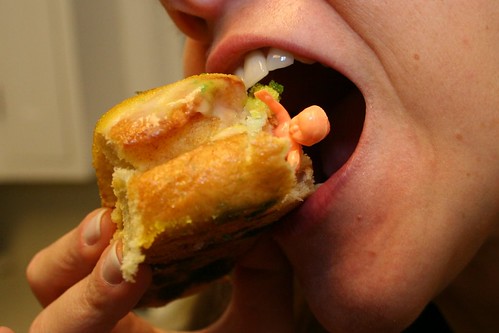
In the King cake version, eaten on Mardi Gras, a naked baby statue is hidden inside (creep town), tying the cakes together, back to the same tradition: a celebration of the Lord taking human form (only to be eaten by a child that then wears a paper crown & "rules" for the year).

Joe & I have been cheating. We've mentioned our favorite pastry here in France, pithivier (puff pastry filled with frangipane). We've eaten a good amount of them. In the south of France, the cake takes on a more brioche texture and is filled with... some sort of fruit filling? Not clear on this. Not yet sad to say that I'm missing it. Luckily for us, the King cake common in northern France is very similar–flaky pastry with frangipane filling. The only difference? The shape... and one special ingredient. A small, ceramic figure.

Though originally a broad bean was hidden inside*, France has upped the ante. Now, all the pastry shops you pass have "Collect them ALL!" signs. Every cake has a ceramic figure inside (multicolored cats, Tour de France bikers, fish of all kinds). Every cake ranges from seven to 15 euros. Collecting them all, for a set of 8 and assuming you get a different surprise in each cake, could cost 120 euros, roughly $160.

We won't be collecting. We will be satisfied with our two free slices, courtesy of a teacher Joe works with. And, surprise surprise, Joe found a small, ceramic penguin in his slice that reminds him, "Partégeons la Planète!" (Let's protect the planet!)  I had the chance to meet the teacher at a Christmas open house at the school, where Joe spent an hour surrounded by students excited to shout in English. (I got their approval, so the night was a success.) Included with our two slices was her recipe for the cake.

Hopefully, I'll try that this week. More hopefully, it will be a bigger success than the naan I tried to make that turned out like breadsticks. (We ate baguette with our cauliflower curry tonight.) We washed the cake down with some chai, made with this (never home)maker chai recipe. I strongly recommend it. I also strongly recommend adding a teaspoon of cocoa, but let it steep a looong time.

You can learn more about the celebration & symbols of Epiphany here. Or even if you don't want to celebrate and just want some cake, check out this link for recipes from several cultures.

Enjoy what you're reading? I'd love to know that we're on track. Click Follow on the right side of the screen to stick with us.

advent, first sunday

~ ~


Today is the first Sunday of Advent. After getting up at seven to start a productive day, I feel back asleep while reading (just started "Les désastreuses Aventures des Orphelins Baudelaire" for gaining some vocabulary). I woke up after our church's Sunday Mass had started. 
Fail. Advent is my favorite time of the year for church-going, & I'm sad that I just missed it all getting started. I did NOT fail on starting our Advent calendar, though. We've yet to buy a chocolate-filled one–soon, though. Soon.
I'm trying to follow John Zmirak's advice and not rush into Christmas. Not being around my family & our traditions & get-together, I'm relying more on Joe & our faith to get us through the holidays without getting too lonely. This means it's time to do some educating for myself.
I wanted to take some time each Sunday to figure out what Advent is all about–I know it's the build-up to Christmas, but what does it really mean? So here's a summary of Advent, week one to make you feel like you've earned the coming seven pieces of chocolate to get you to next Sunday:
The first candle, the Prophet's candle, is traditionally purple & a reminder that the light of the Lord is about to come into the world. It is a symbol of hope, as the prophet's worked to give people hope of the coming of their Lord.*
Hope is something I can definitely use more of right now, as I read news stories of the growing gap between working/middle-class Americans & the über-wealthy, as I think about our planet's future. I want to believe that my generation has enough hope (& will power) to change the course of the world. I have to have hope in this, or I truly become crippled by fear–turning off the news & laying in bed until Joe finds a way to distract me. I'm a worrier, but I'm trying to remember that there is always hope.
I hope that my family traveled safely today while they were out doing their holiday shopping, and I hope that you all continue to read & enjoy the blog.
I also hope, on a more selfish note, that I can finish the Advent wreath project I started. The image above is my progress so far. I'm building an advent wreath out of words, all in the Palatino typeface. It's rough, as I'm not good in Illustrator, but I need to keep sharpening my design skills before Adobe comes out with new versions that put my four years of college in the dark ages of digital design.
Want to learn more about Advent or save some time to reflect? Here's an online advent calendar.
What are you hoping for this Advent season?

eleventh hour

~ ~


I am posting this in preparation for the eleventh hour of the eleventh day of the eleventh month of 2010, in memory of the Armistice to end World War One–put into effect at the same time in 1918. (We're on French time.)

Today in France, we celebrate this Armistice Day and the peace it led to. Today in the States, my family celebrates Veteran's Day for the same reasons. It's nice to feel that I'm again sharing something with the people that mean the most to me.

While the armistice (defined as a temporary cease-fire agreement) didn't officially end the war, the document was renewed monthly until the Treaty of Versailles was signed to officially restore peace. The day of the armistice signing was chosen, then, as the day to commemorate the beginning of peace & the end of the first world war.

Really think about that for a second. The world as we know it at war.

Veteran's Day began the year after the war & slowly evolved into its current full-day of commemoration. The first full national holiday was in 1954 under Eisenhower, who said the day was necessary
...In order to insure proper and widespread observance of this anniversary, all veterans, all veterans' organizations, and the entire citizenry will wish to join hands in the common purpose.
Armistice Day became a national holiday in France in 1922, & this year it will be commemorated with the traditional two minutes of silence at 11 a.m. & a gathering at the hôtel de ville (city hall) this evening.

Being away from home has made me acutely aware of these holidays, shared across an ocean & across different nation's histories. If I were to pick my greatest blessing from my time in France, this would be it. For the first time, I'm not just going with what's happening–accepting my day off as a family picnic or a day away from teaching; preparing to light advent candles when I can't remember why one is pink. I'm dedicating myself to a lot more research, which is fun & much more meaningful.

For example... The Treaty of Versailles marked the beginning of the League of Nations*, without which we would not have established the United Nations–whom I think is robbed of their ability to be effective, & whom I would truly give a limb to have an opportunity to work for. The treaty also returned Alsace-Lorraine (the region we're living in) to France, so we literally could not be in France without it.

For example... I admit it. I can't keep WWI straight. I know the time frame. I know that we blame Germany, that Germany lost, that tons of young men died for us, that the conditions in trenches are something I feel guilty about never having to think about. But do I deserve this holiday, if I can't figure out who did what and why? Sure, I remember how it all started, but do I know what it did for my country, for my family who was lucky enough to already have immigrated from Germany to the States?

So today, I'm reading up on WWI, studying my maps & thinking of my family.

Other Sources:
Veteran's Day
The Armistice
An Armistice
Armistice Day

emulsion

~ ~


For my next attempt at French cooking, I decided to go even more complicated. I Internet searched myself over to this mayonnaise recipe from Alton Brown.

It got a bit tricky right off: I couldn't find white wine vinegar. We had red wine vinegar. We didn't have safflower or corn oil. We had olive oil. I've seen recipes that use both of these ingredients, so I didn't think the switch would matter much.

We also didn't have dry mustard or mustard seed, so I decided to use a touch of our (spicy!) Dijon, which was also the flavor of the tub of mayonnaise we got from the store. I got my ingredients ready. While Joe finished eating the lemon I had juiced, I set to work.

I don't have measuring cups. "Pinches" & "cups" are measured in palm fulls & "well-that-looks-good's." Things seemed to be going well. My oil was mixing right in with the egg yolk. Everything looked happy & golden. I was happy & golden. I remembered to use a glass bowl. My egg was room temperature.

Things were getting thick, & I was honestly thinking to myself, "I really don't get why people complain so much about emulsions. This is cake!"

Then I lifted the whisk. A bit runny, but not bad for a first attempt. I'm thinking that my cup of oil was more than a cup, and since each egg yolk can only handle 3/4 of a cup before things go wishy-washy*, I shouldn't have been surprised.

Then I tasted it.

During my sophomore year of college, I did a liver cleanse. After five days of fasting, you sat in your room–hopefully along & near a bathroom–and drank a few glasses of Epsom salt water. This was chased with fresh squeezed grapefruit juice mixed with 1/2 a cup of olive oil. I have never tasted such a vile, burning flavor.

I was expecting that creamy, fresh egg taste–the full flavor of real mayonnaise. Instead, I held the bitter flavor on my tongue & had flashbacks to that last night of the liver cleanse (which I spent being sick). I'm thinking this is due to the "measurements" of vinegar AND lemon juice. As it sits on the kitchen table, the vinegar-lemon flavor has gotten less. Perhaps another pinch of sugar when I put away will cut down on the rest of the acidity.

Julia Child recommends
using vineger or lemon juice. She also says that after a few times, you should whip up mayonnaise in less than 10 minutes–no problem & no Epsom-grapefruit flavor. Thanks for your confidence, Julia. Next time, I think I'll stick with your recipe.

history & a snack

~ ~


Qui s'y frotte s'y pique.

Upon our arrival in Nancy, Joe & I went to grab postcards for family members. We were sifting through the turning displays of them at a small gift shop when we noticed this adage. We were intrigued, and we started researching.

The translation is something like, "If you mess with it, it will sting you." The French version & the less literal meaning behind it make the phrase much cooler. The phrase was used by Duc d'Orléans and Louis XII (very attractive, joyous-seeming man) before taking up residence in the Lorraine region.

In 1477, Duke Charles of Burgundy was still terrorizing France (and surrounding countries). Duke René II of Lorraine, along with a portion of the Swiss army, decided to take on Burgundy & "Charles the Bold." They had to defend Nancy, capital of Lorraine. The battle is explained, quite efficiently, here.

It was this battle that brought the phrase to the region, though it was altered slightly:
Ne me touche pas, je pique.

The meaning remains similar: Attack knowing that we'll fight back. And they fought back hard, saving their own lives & their French nationality. They also now have this great device honoring the battle and the Lorraine chardon that make it perfect for the region. This sticky flower remains a symbol of the Lorraine.

René II went on to do pretty well for himself. To briefly summarize from Wikipedia (making the briefer, brieferer), he claimed the kingdom of Naples and the county of Provence before becoming King of Naples and Jerusalem. I could go on.

While I'm no historian, I am a sucker for the culture of a town–the nuances that make generations feel connected to each other. Lorraine is teeming with centuries upon centuries of this changing Northern culture (though it official settled in its current shape only a half century before the States became their own country*). This is all to say that come Christmas, Megan is buying herself a Lorraine history book & cookbook. It will be the first history book I've willingly read–and important step if I want to be a well-rounded writer of nonfiction.

One thing that I will not be messing with in any cookbook: andouillette. Not to be confused with the equally frightening andouille. I won't say that I hated it, but as a long time skeptic of the safety of the meat industry and as a massive advocate of sustainable farming I can say it's honestly something I never imagined I would consume. This is how it ended up in my stomach:

Joe & I had been out running around town, & we were hungry. There were plans coming up soon; we didn't have time to mess with dinner. We stopped into Made in France, an almost Subway of sorts where the choices are definitely "classic" French. We weren't sure what a few of the things were. We just knew we wanted sauce blanche on it. I saw the word "artisinal" & went with it. It turned out to be artisinal andouillette all chopped up and covered with vegetables.

Andouillettes are small andouille sausages–a pork dish made with the ENTIRE gastrointestinal system of the pig. It's, needless to say, an acquired taste. While I'd never let an aspic in the same room with me, here's a picture (from their Wikipedia page) to give you an idea of what they looked like when we walked into the grocery store & passed a jar of andouilles floating in their juices. This is how I realized what I'd eaten.

The andouillette was all chopped up, but I definitely had the feeling I was eating something with a sharp, earthy flavor. I don't want to think about that now. I'm certain my parents will find this to be some sort of cosmic justice for all the smoked sausage, brauts & hot dogs I refused to eat for fear of what they were made of or wrapped in. I have an adventurous palate, but I don't know if I can handle something occasionally translated as "French pig-colon sausage."

fall break goal 2: new recipes

~ ~


Today, I'm taking a break from social media (with the exception of this blog post) & e-mail writing to focus on my graduate school applications. So close! I'm also doing day two of the One Hundred Push Ups challenge, which I've now challenged Joe & my sister to join in on... we'll see what happens.

As I mentioned in my previous post with the new pasta recipe, I'm really trying to teach myself some new recipes.

I'm a nervous person. I get anxious, stressed & over-worked on a regular basis. I create to-do lists, goal lists, grocery lists & lists of lists. I'm so good at list-writing that I tend to make them too long, stressing me out before the day has even begun.

To balance out the frightening, heavy things on my to-do lists, I give myself baking & reading breaks. Pouring myself into a story or pushing my hands through the dough of a recipe work to calm me down like nothing else can. So when I'm frustrated with reading in French, I get more frustrated that I can't bake anything. I curse our two hotplates.

I've been looking for new ways to calm myself down–yoga, 100 push ups, knitting. So far, I got too busy for yoga & didn't want to spend the money on yarn. I'm failing at keeping myself calm. I knew that nothing was going to replace my traditional meditative activities, so I've been researching dessert recipes & even knew meal recipes (though making desserts & treats for people is the best feeling to help me lower my stress level). Here enters recipe number two of our fall break: pain perdu, or French-style French toast.

Pain perdu literally translates to "lost bread." French bread has no preservatives, so after a day without eating a baguette, you've made yourself a nice doorstop. To use the old bread, the dip it in vanilla-infused sugar, milk & eggs. Sound familiar? It's similar to our French toast, but that recipe is traditionally Spanish*. You guessed it. If it says "French," it's probably not. (Like French fries, but who would want to say "Belgian fries"* and lost the nice alliteration?)

This is the recipe I used. It's in French, but it's simple: 1/2 liter of milk, 2 eggs, 50 g of sugar + 2 packets of vanilla sugar (or 60 g of sugar + 1 tsp vanilla), 6 chunks of old, thick bread, 100 g of butter. You know what to do from here.

Now, I don't even pretend to understand how much a gram of anything is. I do know that I make a mean batch of French toast, so I cut the proportions in half, because 1/2 a liter is way too much for six pieces of bread! I just guessed until it look about right.

Similar to the milk, you're looking at a lot of butter.

A lot.

Do not be alarmed. It is France. You've watched Julia Child. You knew this was coming. Cut the butter back, but make sure you've left enough to leave a decent layer in the bottom of the pan so that these soggy chunks of sugary, milky flour are really frying.

Joe was still asleep when I turned on the coffee maker & dropped in the first slices of bread. I wasn't sure what to expect, but I'm hoping the sweet butter scent mixed with the coffee that wafted up at me made the early morning wake up pleasant. I know that it was pleasant for me.

People tell you this, but you don't believe it until you really do it for yourself: everything cooks better with real butter. Everything. Joe & I have been cooking with a lot of butter lately, because it's easy to find fresh, inexpensive & unsalted, unplayed-with butter here. The creamy, sweet flavor & golden brown coating it gives foods is unparalleled.

I bring this up, because I hate the debate about which is better for you: margarine or butter? While it's true that margarine has no cholesterol*, it also true that most margarines have a long list of ingredients that aren't found in nature.

I wish I could find links to the studies I've read that support this, but stay with me for a minute. It's touched on here. The problem with these miracle, low-calorie, zero-carb replacements filling the shelves is that their put through long chemical processes to get that way. We haven't had time to study what these products do to the human body. Our body is working on them in some way, but if it's not burning calories to turn them into energy, then is it storing them? Can they be converted into energy, since calories are how we measure a food's energy potential?

This is all I'm saying for now: Look at the perception we have of French obesity rates versus American obesity rates. Look at the prevalence of fast food in each culture. There is a lot to be said for focusing on moderation & natural foods with shorter, comprehensible ingredient lists instead of opting for the trendy packaging that says, "Don't you look smart? This candy has no sugar & no carbs!"

Remember: Those frozen TV dinners were once fashionable, too.

an hour in three countries

~ ~


To celebrate the start of our fall vacation, we headed to our landlord's house in Sierk-les-Bains for the weekend. This was a big test for us: Could our poor American stomachs handle the tartiflette, anise-flavored pastis, & the pressure of living in a language we're struggling with?

In short, yes. In short, we loved every minute of our time with our landlord's family & their good friends that were visiting from Les Vosges–from attempting to help with the kids to feeling like we were a married couple among other married couples.

One of the highlights of the weekend was a driving tour around their small French town's neighboring cities. In less than an hour, the drive took us from Sierck-les-Bains into Luxembourg, the richest (& cleanest to the point of being almost alarming) country in the world & then swung us through Germany.

We enjoyed talking about the changing architecture & languages on road signs, but the trip also opened up a discussion of the countries' energy production. Along the German border stood a row of "éolienne." It took us the rest of the day (& next morning) to get the word right: wind turbines, named after the Greek god of wind.

While swerving along the hairpin curves of the European countryside, our landlord's husband & our tour guide explained that Germany was leading the way with wind power. One article by Reuters that I read while trying to figure out how they had managed to be so ahead of the U.S. on this trend said that 16 percent of the country's energy already comes from wind–and their on track to "kick fossil fuels" by 2050.

We crossed back into France & saw a large wind turbine surrounded by the region's white wine vineyards. After winding up the hill & down a dirt road, we got to the energy park. The earth was buzzing & my ears were fuzzy from the wind when my feet hit the soggy ground outside the van.


Standing underneath the turbine was the strongest sense of fear & hope I've experienced. The near silent swoosh of the unfathomably large blades was sending power down the hillsides. The house working as an education facility near the base of the windmill had two sets of solar panels: one converting light into electricity, one heating the water.

In the distance, we could see a nuclear power center. Nuclear power now supplies 80 percent of France's electricity. While this fact is largely due to the lack of natural resources found in France, the friends we were talking with said they & those they know see nuclear energy as a positive thing for the country.

While nuclear energy requires a lot of water & has a dangerous reputation, it is serving France well & helping lower their pollution levels. France is pushing toward renewable energies & exploring all of their options by acting on them instead of falling back on oil when we're still facing a massive offshore crisis.

It was inspiring to stand on a hill & see all that's possible–four kinds of energy including the diesel moving our van along. I'll borrow words from Professor Jacquinot, scientific advisor to the French High Commissioner for Atomic Energy, found in Alysen Miller's article for CNN.

Would you rather live next to a coal power station or a nuclear power station? I have no doubt that I would choose to be next to a nuclear power station.

Be sure to check out the latest installment of Where's Joe's Head? from our wind turbine adventure, too.

women & marriage

~ ~


While women's issues are something that I'm active in & passionate about, I realize that I've never addressed the issue in my blogging. With the many questions about why I chose to be married, my motivations for marriage & what we were planning on doing together for, well, ever, I decided to dedicate some time to the issue here.

Let me start by saying that Joe & I got married at ages that were considered the "standards" starting in the 1940s*. These standards where in place until our generation started going to elementary school and divorce became a social norm.  So, according to the U.S. Census Bureau we're coming in a few years under average.

While our families were supportive of the marriage, there were a few friends that were shocked–we have so much living & exploring to do still. We need time before we settle into families & children. They warned us. They weren't surprised by our decision, which came after three years of a wonderful (& strenuous stretch of distance) relationship, but they felt the need to caution us. We agree: we have a lot of living to do. The decision to marry isn't the decision to settle permanently & find The Career. We're still exploring, but we realized that the adventures were more fun when we had each other to share with and depend on.

This is the explanation that I keep giving the French students & friends that stare at me with wide eyes. I can see through them to the thoughts in their heads before they start asking questions, and I wanted to get a better handle on why this was so shocking.

According to UNICEF's outstanding list of statistics, 75 percent of French women use contraceptives (76 percent in the States). The French life expectancy (despite smoking & their seemingly "sinful" diets) is 81 while the States hovers at 79. So far, things weren't looking so different. Then, I discovered that those few French women that do get married won't have their first go until near age 30. (To compare this to the rest of Europe, where similar social trends are happening, click here.) I also found this table, which spelled things out pretty clearly.

While divorce rates in the States started to fall in 2009*, France is still on the rise. French marriages are still on a downward slope–less than five per thousand while the States reaches almost eight*. Does this mean that more people are celibate? No. It means that more people are just opting out of marriage. A Washington Post article summarized this well:
The trend in France is driven by a convergence of social transitions in both the demographic and cultural landscapes, including this generation's nearly universal estrangement from religion, especially the Catholic Church; massive migration to urban areas, where young adults are more independent from their families; and a society that has become not only tolerant but supportive of personal choice in lifestyles.

In France, these decisions are not only accepted by society, but also by the National Assembly. In 1999, the government introduced the Pacte Civil de Solidarité (PACs for short). These PACs are documents drafted by two individuals that awards most marriage rights to the couple... and here's where they one-up the states: PACs are available to different or same-sex couples (of no more than two people). (For more in a brief overview, click here.) Note: French law still prohibits same sex marriage.

So my decision to be married in an age of estrangement from the tradition causes several levels of confusion for people. This confusion is compounded when they realize that I, too, have doubts about one's ability to consistently be a good person (let alone a good spouse). I think we're all flawed, but one aim in my decision to be married is to have someone that accepts these flaws & helps me move through them.

Yes, I got married seven years younger than you will, but you'll die two years after me. Really, we're only talking about a five year difference here, and we both have t-shirts older than that, so what's the difference?

The process of coming to terms with being married in society, something I never thought I would have to do, has been interesting & is by no means finished. What is an appropriate answer when someone you hardly know asks, "Why?" Do I explain my faith–or the reason I fell in love with him? Do I bother justifying something that is in no way negative & therefore negates the definition of "justification"? Or do I simply explain it as a difference between two cultures when I understand that this isn't truly the case?

I've taken to looking at hands that swing at the sides of passersby as I walk down the streets of our sleepy little town. Is that purple stone an engagement ring, or could she not decided what other finger to put it on? Did the woman once have an engagement ring above her wedding band, or is it a band to honor her PAC? The challenge to understand marriage in our new culture & country has added new depth & meaning to our new commitment–it has made me a fiercer supporter, a stronger wife & a more avid feminist.

I'll leave this post with two quotes by Adrienne Rich. The first reminds me that I am my own–that I made the decision to marry, to carve my place in the history of feminist wives, not as a historical figure but as a woman striving to make women more than a sum of their domestic "responsibilities." It reminds me that the students or friends or French can say what they want about my marriage, because we did it. We created our name.
Responsibility to yourself means refusing to let others do your thinking, talking, and naming for you.
 The second reminds me to know my reasons before acting. Did I marry early in order to escape an unfamiliar time that was coming? No, but I must remind myself that we have ambitions, that we are not settled; we are just taking the first step forward. Our standards are high, & we've got to keep moving.
Responsibility to yourself means that you don't fall for shallow and easy solutions–predigested books and ideas...marrying early as an escape from real decisions, getting pregnant as an evasion of already existing problems. It means that you refuse to sell your talents and aspirations short...and this, in turn, means resisting the forces in society which say that women should be nice, play safe, have low professional expectations, drown in love and forget about work, live through others, and stay in the places assigned to us.

8: busy, but enjoying it (change)

~ ~

Yesterday was an incredibly busy day. And I loved every minute of it. I was running around the house–in the kitchen, chasing Baby around the bedroom and relaxation in the TV room...

My sister and I have started doing yoga together, with a video that I just got (and is the best I've seen so far). We tried Jillian's yoga, which is not yoga and is actually terrible and miserable and made me like her less. So Chloe and I spend 40 minutes a day with Rodney Yee, a professional ballet dancer, on the TV and stretch across the floor. We look silly. We laugh. We relax. We feel better.

A lot of things made me feel better yesterday, actually. Like spending four hours scraping old caulk from windows with my dad and fiancé. Like making iced red tea with raw sugar. Like cleaning up the whole kitchen and chugging a glass of freshly filtered water. Like being home while Joe went back to work and making tons of food to surprise him.

We've talked about this. I don't like the idea of the expectations put on women–to provide the home life. I want it 50/50. And it is. We both love coming home to the other's surprises, whether its him making me green beans or me cleaning his apartment. Or in the case of today, it was me making Garlicky White Bean Crostini. (I forget where this recipe comes from.)

I put together our food processor, which always reminds me of the Silver Monkey. Then, I tossed this inside:
1 15-oz can of Cannellini (white kidney) beans
2-4 garlic cloves
3 tablespoons lemon juice
1 tablespoon olive oil
1/4 teaspoon sea salt + 1/4 teaspoon pepper
2 teaspoons fresh basil, chopped (my homegrown basil, I might add)

I pulsed this until it was a chunky mixture, then I tossed it in the fridge. It will be put on top of thinly sliced, lightly toasted baguette (hence the "crostini").

Joe and I love finding recipes with beans, since neither of us enjoy eating meat really. Ok, we enjoy it but we don't trust it. This is my soap box and I will stand on it firmly. So beans are a big source of our protein, healthy fats, fiber and fullness. This is a new recipe for us. I suggest adding a little spice, since the white kidneys are a bit bland... maybe oregano to bring a more Italian flavor or cumin for a smoky spice. (I would put cumin on absolutely everything if people let me.)

A million e-mails and wedding details got sorted out... and I'm fighting the urge to decorate the shelter we will have our rehearsal dinner at. I saw a great spread on Design*Sponge (something I stare at too frequently), and I'd love to have a similar casual feel. We'll be at a park, surrounded by playgrounds and ball diamonds, so it would work out nicely. We just don't want to invest the money, but part of me is saying, "So what? Have some fun with it." We'll see. For now, I'll just get back to finishing the place cards and thank-you card early addressing. (Again, we're so so efficient.)

15: things are staying alive

~ ~
So I'm to the point now where I need to use the chive and basil that have really taken hold in their little pots. I need to get some cheeses and make some fresh salads. I was happy with this outcome. I was surprised things had gone this far.

Then, Mom reminded me about the other member of the Tiny Potted Plant family (introduced on my other blog). I had translanted zinnia when I got home at the beginning of summer. At that point, it had about four leaves and about 2.5 inches of stem. It was a sad, wilted little plant. I fed it, watered it and marked it for dead.

And then I saw this! I can't exactly take credit, since I don't water the flower beds. I've tried, but it seems I never get the ground wet enough. I don't water enough, so I let Mom do her thing and keep everything alive, including (to my great surprise) my zinnia.

See that? That's a flower. And that's my baby, growing up the side of the house. Zinnias, like marigolds, can be used to keep pests out of the garden. They don't smell so great to hungry bunnies, and they can get rather tall and work as a deterrent in that way. These could presumably do the job nature made them for at this point. They're real plants.

There's another member of the flower beds that is having some serious success. Mom may not be so excited about how my plant/weed is faring. I think it's amazing and hilarious. He is spiting my mother.

When I bought my milkweed (introduced on my old blog) from Schlafly to support a women's shelter,  I wasn't sure what to expect. I was wondering why I hadn't seen any blooms or blossoms. I did see this.


That's not the camera angle. At this point, the milkweed is nearly as tall as I am. When the two stalks reached this height (maturity? fully grown?) what buds started. They've reached the age where beautiful insects are supposed to hover on their leaves and be attracted to their fragrance and flavor.

They're also reaching the age where I'm supposed to be able to take them apart and eat them–the blossoms, not the whole bloody thing. I'm not sure how I feel about that anymore. I want to see how crazy this thing will go. How many flowers will pop up if I don't eat from it? How many butterflies will come? How many seeds can it make and throw all over my mom's flowerbed and lawn?

I'll keep you posted.

19: who's afraid of virginia woolf?

~ ~
Are you aware that you are, perhaps, the most discussed animal in the universe?

Published only a decade after English women received the right to vote, Virginia Woolf uses fiction to explore her own experiences and findings. The book is an essay with a fictional narrator, rooted in her own experiences with the book's focus: women and fiction. Woolf argue, in a way only she can, that in order to be a Writer in Society woman must have a room of one's own and 500 pounds of income a year.

It is startling to find how much of the book still rings true–that women struggle to make a place for themselves not only in writing, but in society outside of the home. Without beating the breast of women too fiercely, this argument is woven together with the idea that to live in spiritual harmony, man and woman must be codependant.

This is not to say that man and woman must be married. Woolf pauses for a moment to reflect on the ability of women (in fiction and outside of it) can like women–both Platonic and intimate love, and neither mutually exclusive. This is to say that the minds of men and women come together like those of all species–to create a balance that furthers the next generation.

To make this equal, Woolf argues, women must have a way in the world. Because, as she says,
Anything may happen when womanhood has ceased to be a protected occupation, I thought, opening the door.

To make her argument, Woolf relies on the world of academia with subtle imagery and language, to show how strongly women have been excluded (protected, one may try to say?) from academia, and with it business, politics and financial independence.

From the start, the language of the book took me. I couldn't stop myself. I sat on Joe's couch reading the book aloud. The book flows and moves seamlessly, and I envy not only her ability to put the thoughts to paper but to make a strong case–through her ability and style–for Woman's ability to hold their own in literature.

Enjoy it. Don't fight it. Read it aloud. Read it like you're giving a lecture. Like you're the most passionate feminist, the most passionate writer, in existence. You'll find that it's not struggle to believe yourself.

37: finishing the vest

~ ~

That's right. The vest is complete. (Check its progress here, here and here.) It had been sitting around, waiting for the final step (button holes) for a few days. When Mom and I finally had a chance to bust out the button-holer, things went pretty smoothly.

I then had to bust out my favorite work clothes to show just how nice of an addition this will be to my wardrobe. I was surprised by how well the pattern fit me. We didn't have to rip out and let out, pull in or move any of the seams. That's not to say I didn't rip things out. That happened plenty of times. But the final shape fits my frame without pulling across my chest, allowing room for my winter work clothes.


So we sat down and stared at diagrams in the sewing machine instruction manual and without bitterness, anger or cursing we were able to attach the button-holer, slip in the button to set the button hole's size, practice several times on scrap material and take a few deep breaths before slipping the vest under the knife--err, needle.

The process went something like this...
Hole 1: lovely
Hole 2: crisis
Hole 3: lovely
Hole 4: lovely
Intermission: Megan leaves to prevent her screaming. Mom spends quite a while ripping out the mischievous second hole.
Hole 2, Part 2: short

For some reason, the second button hole stops short and comes out a different length than the others. For some reason, I decide it is best not to rip it out again (really, we're not sure the fabric could handle it a second time). I admit that I'm terrified to cut the holes open. (The machine sews the shape of the button hole, then the sewing maching operator slits the space inside the create the hole.) Mom helps out and suddenly... There are button holes!
 

The next morning, I set to work sewing on the buttons, which I adore. (Not the sewing of them, but the buttons themselves.) Mom suggested sewing on the first one, using that to show how the vest should close and then slipping pins into the centers of the other button holes, to get it exactly right.

I made this process more complicated, but in the end it worked out. I had pins all over the thing to make sure everything was evenly spaced, in a straight line, directly in the middle of the button holes.

And I sewed on all but the second button.

See, that second button hole turned out to be a smidge too much smaller than the others. The button wouldn't fit. I wiggle and stretched and twisted, but no dice. I decided, instead of stressing about it, to draw inspiration from some vintage/second-hand stores and even stores like J. Crew: I'd use one flashy novelty button to cover the mistake and spice up the piece.

Mom was exchanging leftover bridal shower desserts with grandma (giving up lemon bars for a few frosted strawberry squares–more than fair) and picked up her tub of buttons. After pouring them all over my bedroom floor, sifting through most of it and finding no small shank buttons (hook on the back, not holes in the middle), I was getting nervous.

Then, stuck under a giant square button with diagonal rainbow stripes, I found her. A round rhinestone button in a clear plastic setting, small enough to fit through the hole and big enough not to fall out of it. A few stitches later and the vest was complete.

Now,  the button admittedly damages the vest's professionalism a bit, but the closest places for button-shopping are 20 minutes away. My goal when I make it out shopping again is to find two small rhinestone buttons, to make it every-other, a bit more conservative as far as mismatching buttons go. My alternative solution: find a smaller version of the buttons I originally bought and see if it's too noticeable. My alternative to the alternative solution: leave vest as-is. In any case, it's wearable, all put together and looking like I know how to sew a seam.

56: cross-stitch

~ ~


**Before starting this post, I'd like to point out the new header, "Learning." A lot of my personal design, now including this blog, has the text "living | learning | observing." I'm spitting up my posts in the same way: living the things we believe in; learning new skills and philosophies; observing the world around us. Enjoy.**

Trying to find left-handed sewing tips didn't go so well. This, most likely, means one of two things: (1) I wasn't looking hard enough or (2) Most lefties experience no trouble sewing.

To avoid frustrations, I didn't do any sewing last night. Instead, I opted for cutting out the material I need for my vest, since I only cut the lining last time. The blister on my index finger has taken a step toward callus, and my thumb had no pain at all. If this were Twitter, I would hashtag that. #Progress. It would pop up in a feed that is largely political, tweets about Obama.

If you're not familiar with Twitter, all I can say is that I'm very sorry.

I was thinking of ways to get around my left-handed slowness. I was thinking about this while working with Dad in a 1950s Pennsylvania Dutch farmhouse that we both absolutely adore. (Maybe I can be creepy and snag pictures. It's the one house that, if I could buy it, would keep me in Wapak.)

We were painting a door in her kitchen, the amazing kind that open at the top and bottom (that you always imagine a horse's head popping through to wish you a good morning). I paused and looked around the room for a clock. Instead, I found a cross-stitch sampler. It read, "Give us this day our daily bread."

When I was in seventh grade Home Economics class, I loved our cross-stitch project. I even bought small Christmas samplers that year, to hang on the tree. I stopped after that, but always liked the idea.

I am very particular about cross-stitch. They get very, very Old Lady very, very quickly. I don't want to be the person that has cross-stitch cats as doorstops, pillows and wall decorations.

Nesting has gotten very trendy lately, overly trendy to the point that it confuses me and stirs my feeling about feminism in our culture. I thought that this trend had certainly spread to cross-stitch. I scanned the Internet and found that this was not the case, not yet.

I did find several rather whimsical, romantic patterns that would fit in with the ecclectic, second-hand design trends that Joe and I love (with a focus on sustainability, comfort, cool colors and economics--something like a low-budget Design*Sponge).


both are from The Art of Stitch 
(left, $25; right, $38.50)
This could easily fit in, and there are no cats, snowmen or children's booties. A good start. I love everything except the price... but I got my first bridal shower gift yesterday, a giftcard from my aunt in North Carolina. I want to use if for bridal shower-ish things, things that will start setting up our house. 

While this should be things like Tupperware or bathmats, I don't want to store that stuff. I want things that I can get my hands into, that I can make for our home. That makes a counted cross-stitch project, which would be completed while in France together, a perfect fit. See how I can make what I want seem logical?

Here's another one that I'm considering. This is a part of my absolute favorite design period (1920-45), a taste of one of the greatest Americans ever.

JVoyage's store on Etsy has this great FL Wright window pattern, sans thread and the like, for $5. (This is the one find that I would qualify as "trendy" or modern.)

57: left-handed sewing

~ ~
I am in the middle of sewing a vest. Well, I'm still in the first quarter.

The lining, my first step, is coming together. After a short time of cursing, blaming my mother for my lack of ability and sitting with my arms crossed, I settled my foot onto the peddle and shut up. Funny how things come together when that happens.

You see, I am left-handed. Usually, this is not a problem. Usually, I can mimic behavior being taught to my like I am their mirror. I reverse without thinking. I know to always sit at the left corner of the table so that I won't bash anyone during dinner. I know that my paper must be turned completely sideways if I want to write in any kind of straight line. (And don't give me that "All lines are straight" remark.)

However, there are some skills that I cannot mirror. Sitting in front of a right-handed sewing machine or using a right-handed pottery wheel, you are forced to be a new kind of left-handed. But now I'm too committed. I've spent to many years sitting at Mom's righty sewing machine to make the switch, even though Lefty's would be happy to sell me all of my lefty supplies.

When it comes to my sewing, this means pinning fabric together in the direction that feels backwards to me, so that they can be easily removed as the fabric is pulled forward. This means still not being able to easily remove the pins, because I put my hand in front of everything I need to see, which then means I take my foot off of the peddle and stop the needle in order to remove a pin. It sounds like your great-grandmother driving a car.

This means that I curse. A lot. I mumble under my breath. This means that when I put in those two finishing back-stitches and see that finished seem, there are all kinds of glory-giving and rejoicing because I DID it, damnit.

In an effort to increase skill and decrease stress, I'm looking into lefty sewing tips. (If you have them, please share.) I could kiss Susan Cowan, whose cover illustrations look more 1950 than 1994. It seems like she's got it covered... hopefully I can find a lot of that content on Web sites until I can get the book.

With 96 illustrations, what more could I need? 96 illustrations that I do not have to reverse in my head like that horrible knitting diagram book that I tried once and hid from myself to prevent a dark depression. Hopefully, CyberSeams will be able to get me back in my seat on the knitting train again.
 
© 2009 - francofile
IniMinimalisKah is proudly powered by Blogger